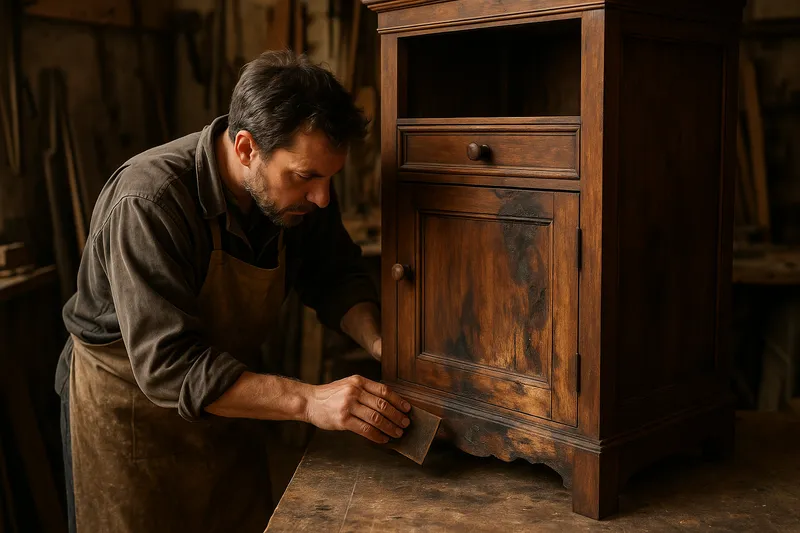
Insurance furniture restoration in Saint Paul, MN is really two jobs at once. One is paperwork: getting your adjuster a clear, itemized written estimate for the furniture portion of the claim. The other is craftsmanship: actually bringing the pieces back. Dale’s Furniture Refinishing does both, with 40+ years of hands-on restoration standing behind the numbers on the estimate. For the damage itself, see fire and smoke damage furniture restoration and water damage furniture restoration. This page is about the claim.
How the furniture claim process works
Report the loss to your insurer first. That opens the claim and gets an adjuster assigned, and everything else hangs off it. Before anything is cleaned, moved, or hauled to the curb, photograph the damage. Shoot each piece where it sits, then get close-ups of the specific problems: the soot line, the split joint, the lifted veneer, the water mark up the legs. Once a piece has been wiped down or carried out to the garage, that evidence is gone, and an adjuster can only work from what they can see or from what someone documented for them.
Then get the estimate in writing. Dale looks at the pieces, tells you honestly which ones are restorable, and puts it on paper: each item, the damage to it, the work required, and the cost. That itemization is what lets an adjuster evaluate the furniture side of a claim. Ask your adjuster whether they want the estimate before work begins, because many policies require review first, and ask them directly what your policy covers. Coverage and limits vary from one policy to the next, so your adjuster is the only reliable answer on that question.
Claim situations we handle
- Fire, smoke, and soot damage, including odor and heat-ruined finishes
- Water damage from floods, burst pipes, ice dams, and leaks
- Storm and roof leak damage to furniture
- Loose and separated joints requiring furniture repair
- Lifted, bubbled, or missing veneer
- Damaged heirlooms needing full antique restoration
- Damaged frames and covers on upholstered pieces
- Moving and transit damage claims
- Written loss inventories covering a whole houseful of furniture
Contents claims and structure claims, in plain language
Insurers split a loss into two buckets. The structure is the building itself: walls, floors, roof, and anything attached to it. Contents is everything you would take with you if you moved: the dresser, the dining table, the chairs, the piano. Furniture restoration lands on the contents side almost every time, and contents usually carries its own limit and sometimes its own adjuster, separate from whoever is handling your drywall.
Built-ins are the exception worth knowing about. Cabinets fastened to the house are typically treated as structure even though the work Dale does on them is the same kitchen cabinet refinishing he would do any other day. Ask your adjuster which bucket each item belongs in before you submit, because a piece filed under the wrong one slows the whole claim down.
What your adjuster usually needs
Adjusters vary, but the documentation they ask for is fairly consistent:
- Photos of each damaged piece, taken before it was cleaned or moved
- A written, itemized estimate listing item, damage, work, and cost
- A short description of what each piece is and roughly how old it is
- Proof of purchase or an appraisal for higher-value antiques, if you have one
- The restoration cost set against what replacement would run
- A clear statement of whether a piece is restorable or a total loss
Dale supplies the estimate side of that in writing, and he will say plainly when something is not worth restoring. A documented total loss is just as useful to a claim as a documented repair, and it keeps you from paying for labor that was never going to work.
Restore or replace
Restoration usually wins on cost, which is why insurers tend to favor it. Bringing back a solid wood dresser, table, or set of chairs generally runs well under what it costs to replace them with furniture of comparable quality, and with antiques and heirlooms replacement is not really possible at any price. That arithmetic is the reason a written restoration estimate is often the shortest path to a settled claim.
It does not go that way every time. A piece burned through structurally, or particle board furniture that swelled and crumbled in a flooded basement, is not cheaper to restore, and Dale will tell you so rather than bill you for it. Honest sorting up front is what keeps a claim moving.
Why choose Dale’s for insurance restoration work
- Itemized written estimates built for adjuster review, not lump sums
- Honest calls on what is restorable and what is a documented total loss
- One craftsman doing the work he wrote the estimate for
- Fire, smoke, water, and structural damage all handled in the same shop
- We always guarantee our work
- 40+ years of craftsmanship, serving the Twin Cities since 1975
Working alongside your restoration contractor
After a serious fire or flood, a remediation contractor is usually handling the building itself: drying it out, tearing out what has to go, dealing with air quality. Dale is not that contractor. He does not do structural drying, mold remediation, or on-site emergency response. He restores furniture, and the two roles fit together well, because the furniture is better off out of a house full of heaters and blowers and in a shop where it can dry slowly and be worked on properly. If a remediation crew is already on site, let them know the furniture is coming to Dale’s and arrange the pickup around their schedule.
Call Dale at (651) 748-9465 for a FREE written estimate you can submit with your claim, or contact us here. For the damage itself, see fire and smoke damage furniture restoration and water damage furniture restoration, or read about everyday furniture repair and furniture refinishing. Current pricing is on the site. Dale serves Saint Paul, Minneapolis, and the surrounding Twin Cities.