Can Smoke-Damaged Furniture Be Saved?
· Dale's Furniture Refinishing
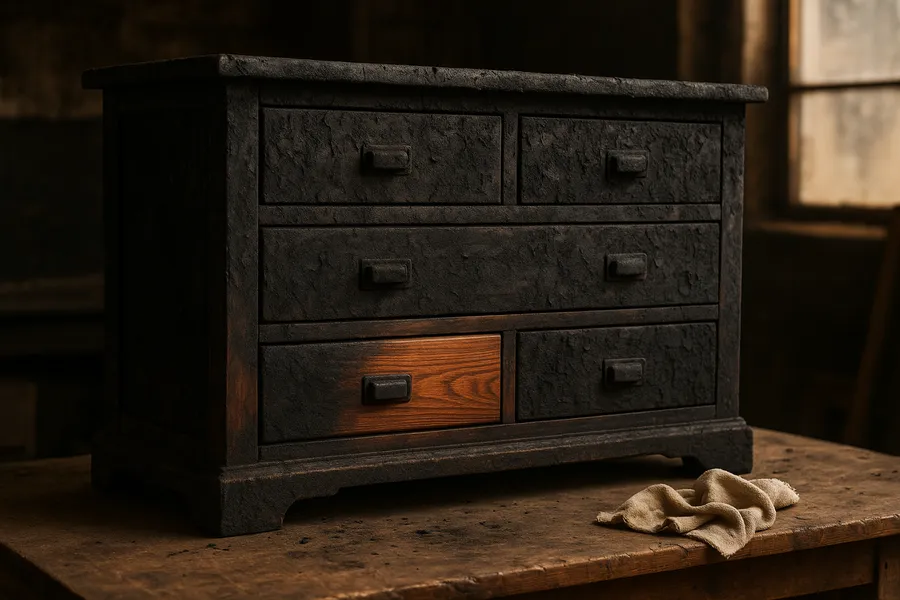
A few days after a house fire, everybody has an opinion about your furniture. The cleanup crew wants the rooms emptied. A relative tells you smoke never really comes out of wood. Somebody says take the settlement. So the dresser goes to the curb with the mattress and the carpet, and a good share of what ends up in that pile did not have to.
I have been refinishing furniture in the Twin Cities since 1975, and plenty of fire and smoke damaged pieces have come through the shop looking black and hopeless and left looking better than they did before the fire. I have also told people straight out that a piece was gone. So the honest answer is: usually yes if it is solid wood, usually no for a short list of specific things, and the difference is not hard to see once you know what to look at.
The One Question That Decides It
When a fire-damaged piece comes into the shop, I am asking one thing first: is the damage on the finish, or in the wood?
- Soot and smoke film sitting on the surface. The good-news case, and the most common one. Soot is a greasy residue that lands on top of things, and the old finish under it acts as a sacrificial layer that takes the worst of the smoke. Strip that contaminated finish off with proper furniture stripping and most of the damage leaves with it, because it never reached the wood.
- A finish that is blistered, bubbled, cloudy, or crazed with fine cracks. Also good news, believe it or not. Heat wrecks finishes long before it hurts the wood beneath them. That is a coating problem, and coatings get replaced.
- Char that went into the wood itself. The bad-news case. Scorching on an edge or a foot can usually be cut back and repaired, but wood that actually burned has lost its strength, and no finish put over it brings that back.
- Joints that heat cooked apart. This one lands in the middle. A chair that simply came loose gets taken apart and re-glued square, which is routine work. But when the glue has let go throughout a whole frame, that tells you how hot the piece got, and I look harder at the wood before promising anything.
Damage on the finish leaves with the finish. Damage in the wood is a different conversation.
What a Fire Actually Does to a Piece of Furniture
Four things happen at once during a fire, and people tend to notice only the first.
Soot deposits. Not ordinary dirt. It is greasy, it smears, and it works itself down into open grain, carving, and hardware.
Odor driven into raw wood. The outside of your dresser is finished, but the drawer interiors, case back, and undersides usually are not. Bare wood soaks up smoke like a sponge. That is why a piece can be wiped down until the outside looks clean and still smell like a campfire every humid day in July. The smell is in the surfaces you cannot see, and it has to be treated there.
Heat damage to the finish and veneer. Crazing, blistering, and veneer that lifted or bubbled as the glue underneath softened. Whether lifted veneer is a simple re-glue or a bigger job depends on the substrate under it, which I cover in my post on repairing versus replacing damaged veneer.
Water. A fire is almost always a water event too. Hoses and sprinklers put a lot of water into a house, and swollen joints, white blushed finish, and lifted veneer follow. That is water damage furniture restoration layered on top of the fire damage, and it needs its own handling.
Why Waiting Costs You
Soot does not sit there politely until you have time for it. It is acidic and keeps working the whole time it sits on a piece. It etches and dulls the finish, pits and corrodes brass and steel hardware, and drives odor deeper into bare wood every week.
A piece brought to me in the first few weeks after a fire is usually a cleaning, stripping, and refinishing job. That same piece six months later can need noticeably more work for the same result. Even if your claim is nowhere near settled, have someone who does smoke damage furniture restoration look at the pieces early.
What to Do, and What Not to Do, Before a Professional Sees It
Do these things:
- Photograph everything before anything gets moved or cleaned. Every piece, multiple angles, close-ups of the worst spots. Those photos cost you five minutes now and are worth real money later.
- Get the furniture out of the smoke-filled space and into dry, ventilated air. Every day it sits in that room it keeps absorbing.
- Handle it gently. Wet, heat-stressed joints are weaker than they look, and lifted veneer chips off when a piece is carried by the wrong edge.
Do not do these things:
- Do not wipe or scrub dry soot. This is the most expensive mistake I see. Dry-wiping grinds the soot into the finish and the open grain, and turns a film that would have lifted off into a stain that has to be stripped out.
- Do not spray household cleaners on it. All-purpose sprays and degreasers can react with old finishes and set the residue instead of removing it.
- Do not seal it in plastic. You trap moisture and odor against the wood, and mildew is the thank-you note you get.
- Do not run it through a heat or drying chamber. Aggressive drying opens joints, splits panels, and lifts veneer.
What Usually Cannot Be Saved
I would rather tell you this up front than take your money and disappoint you later.
- Deeply charred structural wood. Once char runs into a leg, a rail, or a tabletop, the strength is gone.
- Particle board and MDF that got soaked. It swells, loses its grip on fasteners, and crumbles. Not worth the labor.
- Upholstery foam, batting, and stuffing. Once those absorb smoke, cleaning does not get it out and the odor comes back. The frame underneath is very often sound though, since older upholstered furniture was built on real hardwood, so the piece can be re-glued and given new upholstery fabric and foam.
- Badly delaminated veneer over a burned substrate. If the wood the veneer was glued to is charred, there is nothing solid left to glue it back to.
Two things are worth a second look before anyone writes them off. Heirlooms are one. Grandmother’s dresser is built from thicker stock than anything you can buy today, which leaves me material to work with, so that piece belongs in antique furniture restoration rather than a dumpster. A piano is the other. It is the classic “surely this one is ruined” piece, and yet a smoke-filmed case with a heat-crazed finish is often just a piano refinishing job. Have a technician check the action and strings, but do not scrap the instrument over how the case looks.
Restoring Versus Replacing, and the Insurance Side
Restoration usually costs well under replacement, especially for solid wood and anything with real joinery. That math tends to work in your favor with an insurer too, since the alternative is paying to replace the piece outright, so it is worth raising rather than assuming the answer.
Two things help you here. First, those photos taken before anything moved. Second, a written, itemized estimate listing each piece and the work involved, which is what I provide and what an adjuster generally wants to see. Our insurance restoration page walks through that process. I will be careful with my words here: coverage varies by policy, and I cannot tell you what yours covers. Check with your adjuster before committing.
Send Me Photos Before Anything Goes to the Curb
You should not have to decide this in the worst week of your life, and certainly not based on how a piece looks under a layer of soot. Soot looks like the end of the world and usually is not.
Send a few photos through our contact page or call me at (651) 748-9465, and I will give you a straight answer about what is worth restoring. The shop is at 622 Como Ave #1 in Saint Paul. Our fire and smoke damage furniture restoration page covers how the work is actually done, and estimates are free. Get one before the truck comes.