Where to Find Restorable Furniture in Saint Paul
· Dale's Furniture Refinishing
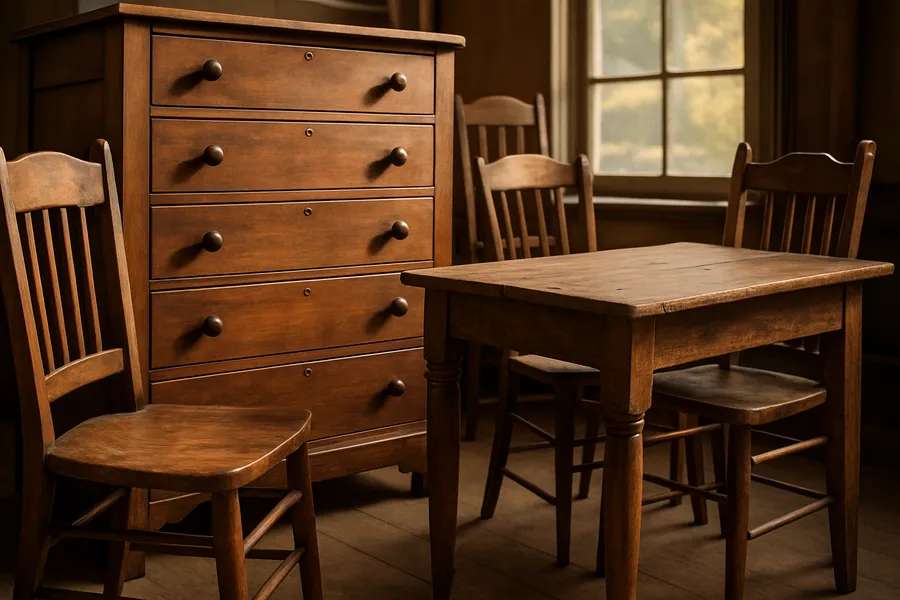
I have been refinishing furniture in Saint Paul for more than forty years, and one thing has never changed: this town is full of good old furniture. It was built when people expected a dresser or a dining table to last a lifetime and then get handed down. That furniture is still here, still solid, and it moves around constantly as households change hands. If you know where to look and what to look for, you can furnish a whole home with better pieces than you will find new in a store, often for a fraction of the price.
The reason is simple. Saint Paul’s older residential neighborhoods have been lived in for a hundred years and more. Places like Como, the North End, Highland Park, Summit-University and Grand Avenue, Macalester-Groveland, and Midway are packed with homes that have held onto their furniture for generations. When those households downsize or clear out, that furniture comes back into circulation. You just have to be in the right places to catch it.
Where to look
None of this is a secret. It is just a matter of knowing which doors to walk through. Here is where the good pieces turn up, roughly in the order I would send a friend.
- Estate sales. This is the best source I know of for solid, well-built furniture. You are buying straight out of a home that has been lived in for decades, so the pieces tend to be real wood from an era when that was the norm. Go early for the best selection, or go late on the last day when prices drop and they just want it gone.
- Auctions. Local auctions, both the in-person kind and the online ones, move a lot of furniture. You have to keep your head about you and set a limit, but you can do very well on quality pieces that nobody else in the room happened to want that day.
- Antique shops and antique malls. More curated, so you pay a bit more, but the picking has been done for you. A good antique mall is a fast way to see a lot of solid old furniture in one afternoon.
- Thrift and secondhand stores. Hit or miss, but the miss costs you nothing and the hits can be remarkable. Furniture that gets donated is often just out of style, not worn out. I have seen beautiful solid oak come through these places.
- Consignment shops. A middle ground. The furniture has usually been looked over for quality before it goes on the floor, so you see fewer duds than at a thrift store.
- Online marketplaces. Facebook Marketplace and Craigslist are worth a daily scroll. People move, they inherit things they have no room for, and they want it out of the garage by the weekend. Bring a tape measure and a flashlight when you go to look.
- Garage and moving sales. Same idea as an estate sale but smaller and more personal. Somebody clearing the house before a move will often let a good piece go cheap just to avoid loading it on the truck.
- Curb and alley finds. Do not laugh. In these old neighborhoods people set solid furniture out on the boulevard all the time, usually because it is scratched or wobbly and they assume it is done. Half of what I have restored over the years started life as somebody’s throwaway.
How to tell if a piece is worth it
Here is where I can actually save you some grief, because most of what scares people off is cosmetic and most of what matters is hidden. When you find a candidate, spend two minutes checking these things before you fall in love with it.
- Solid wood versus particleboard or MDF. This is the whole ballgame. Solid wood is heavy, so lift a corner. Then look at the parts nobody bothered to finish: the underside, the back panel, the inside of the drawers. Real wood shows grain that runs continuous and a little uneven. Pull a drawer out and look at the corners. If the drawer is joined with dovetails (those interlocking finger joints), you are almost certainly holding solid, well-made furniture. Particleboard and MDF look like pressed sawdust or a smooth uniform tan with no grain, and they will not take a restoration.
- Real veneer versus printed laminate. Do not let the word veneer scare you. Real wood veneer is a genuine thin layer of actual wood glued over a solid core, and it has been used on fine furniture for centuries. It sands, patches, and refinishes just fine. What you want to avoid is a printed plastic laminate, a photograph of woodgrain over a fiberboard core. Look at a worn edge or corner: real veneer wears down to more wood, while printed laminate chips off and shows a white or gray board underneath. If you want to go deeper on this, I wrote a whole piece on veneer damage: repair or replace.
- Structural soundness. Give it a gentle rock and a shake. You are checking whether the bones are there, not whether it is perfect. A frame that holds its shape, legs that are all present, drawers that still have their runners, a case that is not twisted out of square. Those are the things that are hard or expensive to replace. Everything cosmetic can be fixed.
The stuff that looks bad but is not
I want to be clear about this, because it is where people leave good furniture on the curb. The following are all normal, all fixable, and none of them should scare you off:
- A scratched, cloudy, or worn-out finish. That is exactly what furniture refinishing is for. A tired finish is skin deep.
- A loose joint or a wobbly chair. Old glue simply gives up over time. Re-gluing a joint is routine.
- A small piece of veneer that is lifting or bubbled. That gets glued back down or patched.
- A musty or closed-up smell. That almost always airs out, and there are simple ways to speed it along.
An ugly but solid piece is exactly what I am hoping you bring me. The uglier it looks, the cheaper you got it, and the finish was always going to come off anyway.
What to actually walk away from
There are a few things that mean a piece is genuinely not worth saving, and honesty is the whole point here:
- Crumbling or swollen particleboard, or MDF that has soaked up water and puffed up. There is no wood there to work with.
- Active woodworm (look for fresh, clean little holes with fine powder around them) or heavy rot. That is a structural and a contamination problem.
- A piece missing major structural parts. A missing knob or a cracked panel is nothing. A missing leg, a gone-to-pieces frame, or a case that has come apart at the seams is usually more work than the piece is worth, unless it is something truly special.
If you are still deciding whether a find is worth the effort at all, I laid out the honest math in why a good old piece is worth restoring over buying new. Short version: a solid old dresser restored will outlast anything you can buy new at the same price.
Bring your find to the shop
If you turn up something and you are not sure whether it is a keeper, bring it by and I will tell you straight. I have looked at enough furniture to know in about thirty seconds whether it has good bones, and I would rather you know before you spend money on it than after. If it is a special one, antique furniture restoration can bring it all the way back.
Come see me at 622 Como Ave #1 in Saint Paul, give me a call at (651) 748-9465, or reach out through the contact page. The assessment is free and the opinion is honest, whether the answer is “let’s restore it” or “leave that one on the curb.”