Moving Antique Furniture Safely: Twin Cities Guide
· Dale's Furniture Refinishing
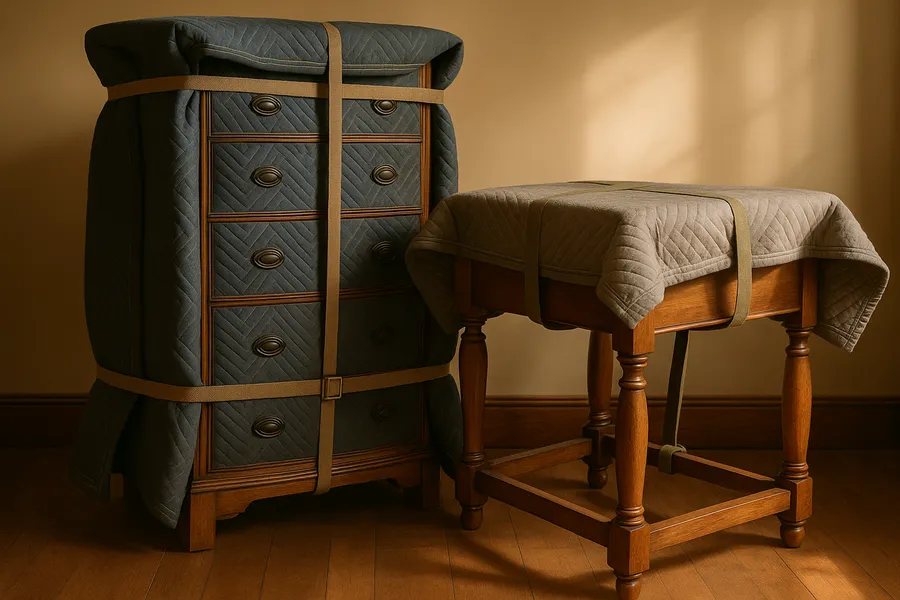
Most of the damage I fix on antiques did not happen while somebody was using the piece. It happened on a moving day. A grandmother’s dresser rides in a truck for twenty minutes, comes out the other end with a wobbly leg or a corner of veneer flapping loose, and now it is sitting in my shop. After 40-plus years doing this work here in Saint Paul, I can tell you the good news up front: antiques are fragile in specific, predictable ways, and a little bit of prep stops almost all of that damage before it starts.
So let me walk you through how these pieces actually get hurt, and then what you can do about it. Once you understand the “why,” the “how” makes a lot more sense.
How a move actually damages old furniture
Old furniture does not break at random. It breaks in the same handful of spots, for the same handful of reasons.
- Racking. This is the big one. Racking is the twisting, side-to-side force that goes through a piece when you drag it, tip it, or set it down crooked. A modern piece with steel fasteners can shrug it off. An antique held together with hide glue and wood joinery cannot. That twisting force works the joints loose, and a joint that was snug for a hundred years suddenly has play in it.
- Snapped legs and stretchers. Legs, feet, and the stretchers between them are thin and they stick out. Lift a table by the top and let the legs swing into a doorframe, and something gives.
- Cracked or sheared veneer. Veneer is a thin skin of nice wood glued over a plainer base. Old veneer gets brittle, and the glue underneath gets tired. A hard knock or a squeeze against another load can lift it, chip it, or shear a piece right off.
- Scratched and crushed tops. The top surface is what you see and what a buckle, a zipper, or the corner of a box finds first.
The thread running through all of this is the same: on an antique, the glued joints are the weak point. They are decades or a century old, and they do not like to be twisted, dragged, or dropped. Keep the piece from racking and you have won most of the battle. If you want the longer story on how joints give out, I wrote about why chairs get wobbly and loose at the joints and the same forces apply to case pieces.
Prep the piece before you lift a finger
The work you do standing still, before anything moves, is what saves the piece. Do not skip it because you are in a hurry.
- Empty the drawers. A loaded drawer adds weight and can slide out mid-carry. Either pull the drawers out entirely and move them separately, or secure them shut so they cannot fly open on a stair.
- Remove or secure loose parts. Take off anything that lifts, slides, or swings: shelves, glass panes, marble tops, and mirrors. If a part cannot come off, pad it and tape it in place so it is not banging around.
- Carry marble and glass on edge. Marble tops and glass are strong on edge and weak flat. Carried flat, they crack under their own weight the first time somebody stumbles. Move them vertically, standing on edge, and never lay them down flat during transport.
- Remove feet or legs that unscrew. A lot of older tables and beds have legs or bun feet that thread off. If yours do, take them off. It is ten minutes now versus a snapped leg later.
- Photograph the piece first. Take a few clear pictures before it moves. If something does go wrong, you will know exactly what it looked like, which helps with insurance and helps me when it lands on my bench.
Wrapping: blankets first, never bare plastic
Here is a mistake I see all the time. Somebody wraps a beautiful old finish in plastic stretch wrap, right against the wood, and tapes it up tight. Please do not do this. Plastic against a finish traps moisture, and in a hot truck it can stick to the finish or leave it cloudy and hazed. I have seen stretch wrap pull a soft finish right off.
Do it in this order instead:
- Moving blankets and pads go on first, directly against the wood. They cushion knocks and they let the finish breathe.
- Then strap or wrap over the blanket if you want to hold everything snug. Now the plastic or the strap is against the blanket, not against your finish.
- Pad the corners and edges with extra material. Corners take the hits, and they are where veneer chips and finish crushes.
Lifting and carrying without racking the joints
This is where good intentions cause the most damage, so read this part twice.
- Lift, never drag. Dragging is pure racking force straight into the joints. Pick the piece up and set it down. Do not skid it across the floor to save your back.
- Lift from the solid base, not the weak parts. Get your hands under the heavy structural bottom of the piece. Do not lift a chair by its arms or back rail, a chest by its top overhang, a table by the apron, or anything by its drawer pulls. Those parts are attached with glue and small joinery, and they were never meant to carry the whole weight.
- Use two people and keep it upright. Two sets of hands, moving slow, keeps the load even and keeps the piece from twisting. Tipping and pivoting a heavy piece by yourself is how joints let go.
- Plan the path before you lift. Walk the route first. Look at every doorway, stair, and tight corner, and measure the narrow spots. Old Saint Paul houses are full of turns that a dresser simply will not make, and you want to know that before it is in your arms.
In the truck
Getting it loaded is not the finish line. The ride is where a well-prepped piece can still get hurt.
- Secure it so it cannot shift or tip. Strap it to the wall of the truck over its blanket. A piece that is free to slide will find something to hit.
- Keep it off metal and away from other loads. Do not let wood rub against a metal wall, a dolly, or the corner of an appliance. Give it its own space with a blanket between it and everything else.
- Mind the temperature. Do not let old wood bake in a closed truck in July or sit frozen for hours in January. Big swings in heat and humidity stress old finishes and old glue, and a piece that rode all day in extreme temperatures can show cracks and loose veneer that were not there that morning.
A Twin Cities note
Moving here comes with its own wrinkles. In winter, cold makes finishes brittle and more likely to chip on a bump, and the salt, slush, and wet that ride in on boots and dollies are no friend to old wood. Wipe your path and your piece down, and do not set an antique on a wet garage floor.
And our housing stock matters. So much of Saint Paul and Minneapolis is older homes with narrow staircases, tight landings, and doorways built for smaller furniture. Measure the piece and measure the openings before you commit. It is far better to pull the legs and turn a dresser on its side by choice than to discover halfway up a stairwell that it does not fit.
If something does go wrong
Do not panic, and please do not try to force a loose joint back with the wrong glue. If a joint loosens or a piece of veneer lifts during a move, that is routine, fixable work. It is a big part of what I do every week. Loose joints get properly re-glued, and lifted veneer gets laid back down. If you want to understand your options there, I have written about veneer damage: repair or replace. For structural pieces, honest furniture repair is usually straightforward, and for a treasured heirloom, full antique furniture restoration can make it right again.
One more thing worth knowing if a moving company caused the damage. Movers carry a limited liability by default, and a claim usually goes better with an independent written estimate that itemizes each piece and the work it needs. That is exactly what our moving damage furniture repair work covers, and I am glad to write the estimate up so you have something concrete to hand over.
Bring it by the shop
If a move left one of your pieces worse for wear, or you just want a look before you trust it to a truck, I am glad to take a look. Call me at (651) 748-9465 or stop by the shop at 622 Como Ave #1 in Saint Paul. You can also reach me through the contact page for a free assessment. Bring the photos you took, and we will figure out the honest path forward together.