Why Chairs Get Wobbly (Re-Glue vs. Re-Join)
· Dale's Furniture Refinishing
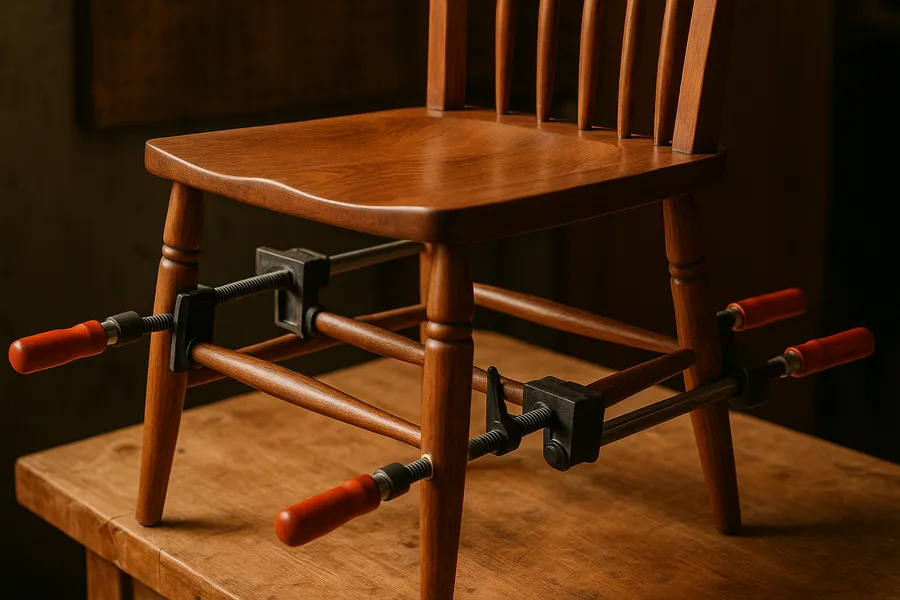
You know the feeling. You sit down at the dinner table, and the chair gives a little shudder, a small side-to-side wobble that wasn’t there a year ago. Most people do the same thing: they shift their weight, decide it’s fine, and go on eating. Over my 40-plus years working on furniture in Saint Paul, I’ve seen that exact wobble turn into a cracked leg more times than I can count. A loose chair is trying to tell you something, and the sooner you listen, the cheaper and simpler the fix.
Let me walk you through why wooden chairs come loose in the first place, and the difference between a re-glue and a re-join, so you know what your chair actually needs.
Why Wooden Chairs Get Wobbly
A chair looks solid, but it’s really a set of small joints doing a big job. Every time you sit, lean, or scoot, the load funnels down through a handful of connections where the rungs, legs, and stretchers meet. Those joints are what fail, and there are a few honest reasons why.
Wood Moves With the Seasons
This one hits hard here in Minnesota. Wood is never truly done moving. It swells when the air is humid and shrinks when the air is dry, and our climate swings hard in both directions. A dry, heated house in January pulls moisture out of the wood and the joints shrink. A muggy August afternoon puts some of it back. Season after season, that expanding and contracting works a glued joint loose, a little at a time, until one day you feel the wobble. It isn’t that anyone did anything wrong. It’s just wood being wood in a climate with real winters and real summers.
The Old Glue Simply Let Go
A lot of the older chairs I see were built with hide glue, which was the standard for generations. Hide glue is good stuff, and I still respect it, but it does give up its grip over the decades, especially with all that seasonal movement working against it. When the original glue crystallizes and lets go, the joint is loose even though the wood parts are still perfectly fine. This is extremely common on antiques and older hand-built chairs.
Years of Racking Stress
Then there’s how we treat chairs. People lean back on two legs. Chairs get dragged across the floor instead of lifted. Kids rock in them. All of that puts a twisting, side-to-side force on the frame, what we call racking, and it lands on those same few small joints that carry the whole load. Enough of it, over enough years, and the joints work themselves loose.
The One Thing You Should Not Do
Here’s the most important part of this whole article, so I’ll say it plainly. Do not squirt a bunch of wood glue into a wobbly joint and call it done.
I know it’s tempting. The joint is loose, glue sticks things together, so it seems obvious. The problem is that new glue does not bond to old glue, to grime, or to finish. It only bonds to clean, bare wood. When you flood a loose joint with fresh glue, you’re gluing to the old dried residue that’s already failing, so the fix might feel solid for a week or a month and then let go again. Worse, that hardened glue fills up the joint and makes a proper repair harder and messier when the chair finally comes to me.
A real repair means doing it the honest way:
- Take the loose joint apart instead of gluing over the problem.
- Clean the old glue, grime, and finish off both the tenon or dowel and the socket, down to fresh bare wood.
- Apply new glue to those clean surfaces.
- Clamp the joint so it cures under real pressure, not just held by hand for a minute.
That’s the difference between a repair that holds for another few decades and a squirt of glue that fails by the next holiday dinner.
Re-Glue vs. Re-Join: What’s the Difference?
Once a joint is apart and cleaned, I can see what it actually needs. Almost every wobbly chair falls into one of two buckets.
Re-Glue (the Common Case)
A re-glue is for when the joint parts themselves are still in good shape. The tenon or dowel is solid, the socket is sound, and the joint has just come loose over time. Nothing is broken, it’s simply lost its grip. Here the fix is exactly what I described above: disassemble, clean back to bare wood, re-glue, and clamp until it cures. The great majority of loose chairs I see are a straightforward re-glue, and when it’s done right, that joint is stronger than the wobble ever suggested.
Re-Join (When the Joinery Is Damaged)
A re-join is a different animal. This is when the joinery itself is broken, not just loose. Glue alone won’t save it because there’s nothing sound to glue. You’re looking at a re-join when you find:
- A tenon that has snapped off inside the socket.
- A rung or spindle that has cracked clean through.
- A socket that’s stripped out or worn oversized so it no longer grips.
- A cracked or split leg.
Now the work goes beyond glue. It might mean turning a new dowel or tenon, making a replacement rung or spindle to match, or rebuilding the joint so it’s sound again before it ever gets glued back together. It’s more involved, but it’s what keeps a good chair in service instead of out at the curb.
A Wobble Now Is a Break Later
The reason I push people not to ignore a wobble is simple. A loose joint doesn’t stay the same, it gets worse, because all that movement concentrates stress right where the wood is weakest. That flexing back and forth is exactly what cracks a rung or splits a leg. A chair that needs a simple re-glue today can become a re-join, or worse, if you keep sitting on it loose for another year. Catching it early is almost always the cheaper repair, and it saves the original wood.
One more note. If your chair also has a woven seat that’s sagging or failing, that’s separate work from the frame. The frame should be solid first. I won’t weave a fresh chair caning seat onto a wobbly frame, because you’d just be building a nice new seat on top of a problem. If you’re not sure what kind of woven seat you’ve got, here’s a guide on how to identify your chair’s woven seat. Fix the joints, then reseat, and the whole chair is right.
Bring the Wobble In Before It Becomes a Break
Whether your chair needs a simple re-glue or a full re-join, we can take a look and tell you honestly what it needs. Careful joint work is a big part of the furniture repair we do, and it’s some of the most satisfying, because a solid chair should last generations.
Not every wobble comes from age, either. A dog that has worked over a chair leg or a stretcher can chew away enough wood to leave the joint unsupported, and rebuilding that leg with matching stock is routine pet damage furniture repair. A chair that took a hard knock during a move is the same story, covered under moving damage repair.
Call us at (651) 748-9465, stop by the shop at 622 Como Ave #1 in Saint Paul, or reach out through our contact page for a free estimate. Bring that wobble in now, while it’s still an easy fix, and let’s keep your chair on all four legs for a long time to come.