Types of Chair Caning: How to Identify Yours
· Dale's Furniture Refinishing
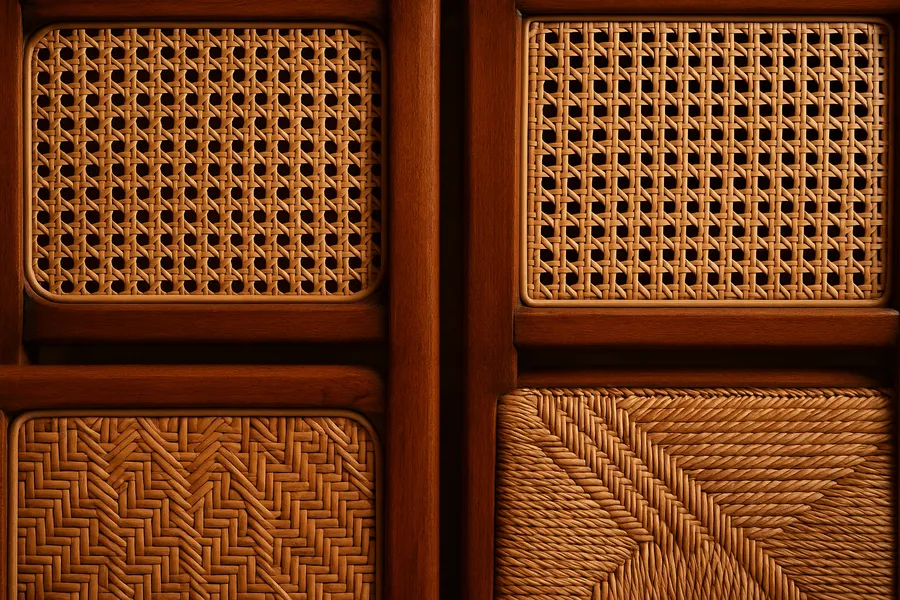
If you’ve got a chair with a woven seat that’s sagging, cracked, or unraveling, you might assume it’s all the same kind of “cane.” It isn’t. Over my 40-plus years working on furniture in Saint Paul, I’ve re-seated thousands of chairs, and the first job is always figuring out exactly which type of weaving you’re looking at, because each one is a different material, a different technique, and a different repair.
Here’s a plain-language guide to the main types of chair caning and seat weaving, how to tell which you have, and what to expect when it’s time to fix one.
Why the Type Matters
The weaving on a chair seat isn’t decorative trim. It’s the structure you sit on, and the material and method determine everything about the repair: the cost, the time, and whether it can even be patched or needs to be fully redone. Identifying the type correctly is the difference between a repair that lasts another 50 years and one that fails in a season. So before anything else, let’s learn to tell them apart.
The Main Types of Chair Caning
Hand-Woven Cane (Strand Cane)
This is the classic that most people picture. Hand cane is woven from individual strands of rattan, threaded one at a time through a series of holes drilled around the perimeter of the seat frame. The weaver builds it up in steps, and the finished result is that familiar pattern of open octagonal holes.
How to identify it: Look for a row of drilled holes around the edge of the wood frame. If you see holes and the strands pass through them, you have hand cane. This is the telltale sign that distinguishes it from sheet cane.
Hand caning is time-consuming, skilled work done entirely by hand, which is part of why it’s prized on antique and quality chairs.
Pressed Cane (Sheet or Machine Cane)
Pressed cane looks similar at a glance, with the same woven pattern, but it’s made completely differently. It comes as a pre-woven sheet of cane webbing that’s pressed into a groove routed around the seat opening and held in place with a wedge of reed spline.
How to identify it: Instead of individual holes, you’ll see a continuous groove around the seat with a thin strip of spline covering the edge of the cane. No holes means sheet cane. This is the most common type on factory-made chairs from the last century.
Sheet cane is faster to install than hand cane and is the right choice for chairs that were originally built for it.
Rush (Fiber and Natural Rush)
Rush seating has a woven look but with a very different texture, formed from twisted strands wound in a pattern that creates four triangular sections meeting in the center. Traditional rush was made from twisted cattail leaves; today it’s commonly done with a strong twisted paper fiber (fiber rush) that’s durable and attractive.
How to identify it: Look for that distinctive woven pattern radiating from the center into four triangles, with a coarser, rope-like strand rather than flat cane. Ladder-back and many country-style chairs typically have rush seats.
Danish Cord
Danish cord shows up on mid-century modern furniture, the clean-lined Danish and Scandinavian chairs that have become so popular again. It’s a tough, three-ply twisted paper cord woven over the frame, often wrapped around L-shaped nails or pegs on the underside.
How to identify it: A taut, even weave of pale, sturdy cord on a sleek modern frame, usually a teak or walnut chair from the 1950s through 1970s. If your chair has that mid-century look and a woven paper cord seat, it’s almost certainly Danish cord.
Splint
Splint seating is woven from thin, flat strips of wood, traditionally hickory, ash, or oak, in a simple over-under basket-weave pattern. It’s rustic, sturdy, and common on Appalachian and country chairs.
How to identify it: Wide, flat wooden strips woven like a basket, with a warmer, woody appearance rather than the fine strands of cane or the twisted strands of rush.
How to Know Which One You Have
When customers aren’t sure, I tell them to check a few things in order:
- Look at the frame edge. Drilled holes mean hand cane. A groove with a spline means pressed sheet cane.
- Check the pattern. An open octagonal weave is cane. Four triangles meeting in the center is rush. A basket weave is splint.
- Feel the material. Flat, fine strands are cane. Twisted rope-like strands are rush or Danish cord. Wide flat wood strips are splint.
- Consider the chair’s age and style. Antique formal chairs often have hand cane; factory chairs have sheet cane; ladder-backs have rush; mid-century pieces have Danish cord; country chairs have splint.
If you’re still not certain, snap a few photos and we can usually identify it for you in a minute or two.
Repair or Replace the Seat?
The good news with woven seats is that the chair frame itself is almost always worth saving. The seat is meant to be a replaceable, serviceable part. Here’s how I think about it:
- Small cosmetic issues on hand cane can sometimes be touched up, but a cracked or sagging woven seat usually needs to be fully rewoven rather than patched, because a partial fix won’t hold.
- Sheet cane that has split or popped out of the groove is replaced as a whole new panel, which is a relatively efficient repair.
- Rush, Danish cord, and splint seats that are broken or unraveling are rewoven with fresh material in the original style.
- The frame comes first. If the chair is loose or wobbly, the joints should be re-glued before reseating, so you’re not weaving a new seat onto a failing frame. That’s where our furniture repair work comes in.
Done properly with quality materials, a freshly woven seat will outlast most of us. Matching the original method keeps the chair authentic and comfortable, which is the whole point. You can see more about how we handle each style on our chair caning page.
Bring Your Chair In for a Look
Whether it’s a hand-caned antique, a mid-century Danish piece, or a country ladder-back with a worn rush seat, we can identify the weaving and restore it the right way. It’s careful handwork, and it’s some of the most satisfying repair we do.
Woven seating isn’t the only thing that comes apart strand by strand. Porch and sunroom furniture with broken reed, loose arm bindings, or a sagging woven seat falls under our wicker and rattan repair work, which uses much the same patience and many of the same materials. If your chair is a mid-century Danish cord piece, it often pairs with mid-century modern restoration on the frame at the same time.
Call us at (651) 748-9465, visit the shop at 622 Como Ave #1 in Saint Paul, or send photos through our contact page for a free estimate. Let’s get that chair back into service for another generation.