Hand vs. Dip Stripping: Why We Strip by Hand
· Dale's Furniture Refinishing
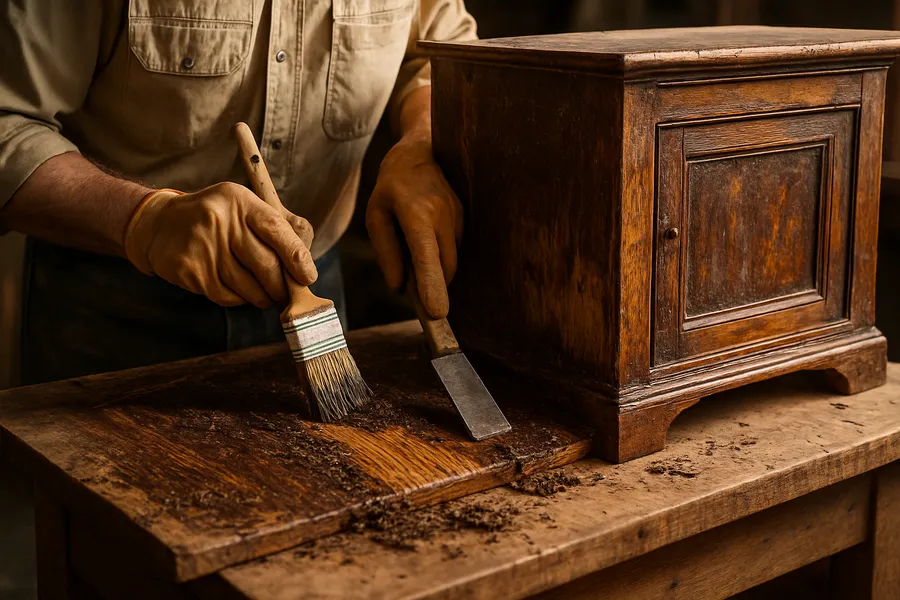
Every few months somebody brings me a chair that came out of a dip tank, and the story is almost always the same. They took a set of dining chairs to a place that promised to strip them fast and cheap, got them back gray and fuzzy, and now the joints wobble and the veneer is peeling off in sheets. They want to know if I can fix it. Usually I can, but it costs more to undo the damage than it would have cost to strip the piece right the first time.
So let me lay out the difference between dip stripping and hand stripping, and why after 40-plus years I still strip every piece in my shop by hand.
What dip stripping actually is
Dip stripping is exactly what it sounds like. The whole piece of furniture gets lowered into a big tank of chemicals and left to soak until the old finish lets go. There are two common versions of it.
- Hot caustic tanks. The tank is full of hot lye (sodium hydroxide) and water. The heat and the lye eat the finish off in a hurry.
- Cold chemical baths. These use a solvent-based stripper instead of lye, at room temperature. Gentler than hot caustic, but the piece is still submerged and soaking.
The appeal is obvious. Dipping is fast, and because it is fast it is cheap. A shop can run a lot of furniture through a tank in a day with very little hand labor. That is the whole advantage, and I want to be honest that it is a real one. If speed and price were the only things that mattered, the tank would win.
But furniture is joints, glue, veneer, color, and detail, and a tank does not know the difference between the finish you want gone and the wood you want to keep.
The damage a dip tank does
Here is what I see come back out of a tank, and why I will not put your furniture in one.
It soaks into the wood and raises the grain. Caustic and water drive deep into the pores. The wood swells, the grain lifts, and the surface comes out rough and fuzzy instead of smooth. Now somebody has to sand all of that back down, and every pass with the sandpaper takes away a little more of the old wood and its character.
It dissolves the glue in the joints. Most old furniture is put together with hide glue, and hide glue lets go in hot water and lye. So the piece goes into the tank solid and comes out with loose rungs, wobbly legs, and drawers falling apart at the corners. On a chair especially, that soak can turn a tight frame into a bag of sticks. Everything has to be knocked apart and reglued, which is real work created by the stripping method itself.
It pulls the color and life out of the wood. Lye reacts with the tannins in the wood. Oak, walnut, cherry, and mahogany can come out gray, washed out, or blotchy, with dark streaks where the chemical pooled. That warm patina that took a hundred years to build up is gone, and you cannot sand your way back to it. It is a chemical change in the wood, not just a surface thing.
It lifts the veneer. A lot of good older furniture is veneered, meaning a thin layer of nice wood glued over a sturdier base. That glue is the same hide glue that fails in the tank. So the veneer swells, bubbles, and buckles, and once it lifts it wants to crack and chip. That is fussy, careful work to fix, and I wrote a whole piece on veneer damage: repair or replace.
It leaves residue that bleeds back out. Caustic soaks so deep that you can rinse the surface and still have chemical trapped in the pores. Weeks later, after the piece has a fresh finish on it, that residue can weep back out, cloud the finish, keep it from curing, or leave a haze you cannot buff away. Then the new finish has to come off and the job starts over.
None of that is me talking down the competition. It is just what soaking wood and old glue in hot lye does.
What hand stripping is
Hand stripping is slower because a person does it, one section at a time, with their eyes on the wood the whole way.
I brush the stripper on by hand, let it sit and do its job, and then lift the softened old finish off with a scraper, a putty knife, picks for the carving details, and rags. I work a section, check it, and move on. The stripper stays on the surface and works the finish. It never soaks the piece through the way a tank does.
Because I control where the chemical goes and how long it stays, hand stripping protects the things that matter:
- The joints stay tight because the glue never gets flooded and soaked loose.
- The veneer stays put for the same reason.
- The color and patina survive because I am not driving lye deep into the wood and cooking the tannins.
- The crisp detail lives in the carvings, the moldings, and the turned legs, instead of getting rounded off by a tank and heavy sanding.
It takes longer and it costs more in labor. I am not going to pretend otherwise. What you are paying for is a piece that comes out of stripping still solid, still colored right, and still sharp in the details, so the furniture stripping step sets up a beautiful finish instead of creating a pile of repairs.
Is a dip tank ever the right call?
I want to be fair, because there is a place for it. If a piece is:
- solid wood all the way through, no veneer,
- held together with screws or sturdy modern joinery, not old hide glue you are trying to save,
- and paint-grade, meaning it is getting repainted so color and patina do not matter,
then a tank can be a reasonable, economical choice. A solid exterior door, a porch rail, a chunky paint-grade shelf. Things with nothing delicate to lose. For that kind of work, dipping does the job and saves money, and I will tell you so.
The trouble is that almost nothing worth refinishing fits that description. Any antique, anything veneered, anything glued up with hide glue, anything where the color and grain are the whole point, should never see a tank. That covers just about every dresser, table, chair, buffet, and cabinet people bring me. When in doubt, keep it out of the tank.
Why I still strip by hand
I strip by hand because I am not just trying to get the old finish off. I am trying to keep everything underneath it. Forty years of doing this has shown me that the stripping step is where most of the damage gets done to good furniture, and once the wood is gray or the veneer is buckled, you are refinishing a lesser piece than the one that came in the door.
Doing it by hand is also part of respecting the piece. If you are wondering whether refinishing an old piece is even a good idea, I covered that honestly in whether refinishing an antique hurts its value. The short version is that careful work protects value and careless work destroys it, and the stripping method is a big part of which way it goes. That matters even more with real antique furniture restoration, where every choice either honors the piece or cheapens it.
Slower, yes. But I have never had a customer wish I had rushed their grandmother’s table through a tank.
Bring it in and let me take a look
If you have got a piece you are thinking about stripping, or one that already came out of a tank looking rough, let me have a look at it before you decide anything. I will tell you straight what it needs and whether hand stripping is worth it for that particular piece.
Call me at (651) 748-9465, or stop by the shop at 622 Como Ave #1 in Saint Paul. You can also reach out through the contact page for a free assessment. No pressure, just an honest opinion from somebody who has been stripping furniture by hand for a long time.