Should You Refinish Furniture Yourself? Pro's Take
· Dale's Furniture Refinishing
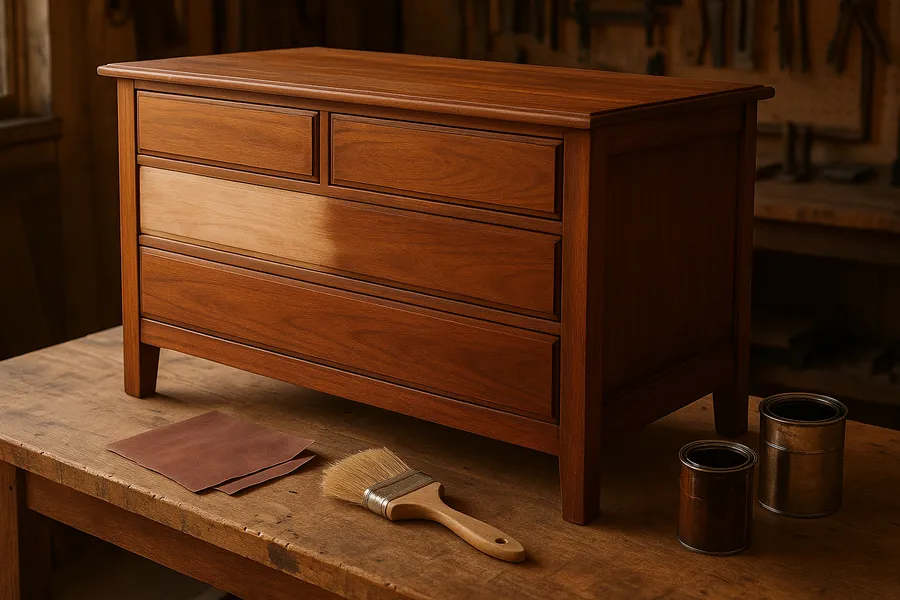
I get asked this all the time. Somebody finds an old dresser at an estate sale, or they inherit grandma’s table, and they want to know if they should tackle it themselves or bring it to me. I’m a refinisher, so you’d expect me to say “hire a pro” every time. I don’t. Some pieces are a perfect first project, and you’ll be proud of what you did. Some pieces will break your heart, and your wallet, if you try. The whole trick is telling those two apart before you pick up a piece of sandpaper.
After forty-plus years in the shop, here’s my honest take.
When Doing It Yourself Makes Good Sense
There’s real satisfaction in bringing a piece back to life with your own hands. If the stars line up, I’ll be the first to tell you to go for it. Here’s when I think DIY is a smart call:
- It’s a low-value or paint-grade piece. A plain pine nightstand, a garage-sale end table, something you paid twenty bucks for. If it doesn’t come out perfect, you haven’t lost much, and you’ll learn a ton.
- It’s solid wood, not veneer. Solid wood forgives mistakes. You can sand it, and if you go too far you just sand a little more. Veneer is a paper-thin layer of nice wood over cheaper stuff, and it does not forgive anything.
- The structure is sound. No wobbly legs, no split boards, no drawers falling apart. If it’s solid, you’re just working on the surface, and the surface is the friendly part.
- The job is simple. A light scuff-and-recoat, or wiping on an oil finish. Those are honest afternoon projects. You’re not stripping down to bare wood and starting over.
- You actually enjoy this kind of thing and you’ve got the time and the space. Refinishing is not fast. If a rainy Saturday in the garage sounds good to you, that’s half the battle won.
If that’s your piece, here are a few tips from someone who’s made every mistake at least once:
- Test your finish first. Always try your stain and topcoat on the underside or a hidden spot before you commit. Wood drinks color in ways you can’t predict from the can.
- Work where you’ve got air moving. Strippers, stains, and finishes put off fumes you don’t want to breathe. Open the doors, run a fan, and read the label.
- Patience beats power tools. The single biggest DIY mistake I see is somebody reaching for a belt sander or an aggressive grit and chewing through the wood. Go slow, use a lighter hand than you think you need, and let the material do the work.
Do the simple stuff. There’s no reason to pay me to wipe a coat of oil on a solid oak stool. That’s a good weekend, not a service call.
When to Hand It to a Pro
Now the other side. Some pieces are the wrong classroom to learn in, and I say that as somebody who wants you to succeed. Here’s when I’d steer you toward professional furniture refinishing:
- Anything with thin veneer. This is the big one. That veneer might be a fortieth of an inch thick. One pass with a sander in the wrong spot and you’re through it, into the glue and the substrate, and there is no fixing that. Once veneer is sanded through, the piece is done.
- Genuine antiques or valuable pieces. A bad refinish can wipe out real value, sometimes most of it. If a piece has age and character to it, get it looked at before you touch it. I wrote more about whether refinishing an antique hurts its value, because the answer is “it depends,” and getting it wrong is expensive.
- Sentimental pieces you can’t replace. If it’s your grandmother’s table and there’s only one of them in the world, that’s not the project to practice on. The stakes are all emotional, and those are the ones people regret rushing.
- Loose joints or structural damage. If the piece needs to come apart, be reglued, and squared back up, that’s furniture repair, not just refinishing. Surface work over a wobbly frame is lipstick on a problem.
- Spray-only finishes and fine color matching. A factory-smooth lacquer or a precise stain match to blend a repair is genuinely hard to do by hand. It takes the right gun, the right booth, and a lot of reps.
- Chemical stripping you’re not set up for. Stripping a whole dresser safely takes ventilation, the right products, and someplace to deal with the mess and the waste. This is a good chunk of what we do, and there’s a reason furniture stripping is its own service. If you’re not equipped to do it safely, that alone is a fair reason to bring it in.
- Jobs where your time is worth more than the savings. Sometimes the honest answer is you could do it, but between the learning curve and the weekends, it costs you more than paying somebody who does it every day.
What Doing It Yourself Actually Costs
People think DIY is free because they’re not paying for labor. Their own labor, that is. Let’s be honest about the real math, not to scare anybody off, just so you go in with eyes open.
First, materials. Stripper, sandpaper in a few grits, stain, topcoat, rags, brushes, gloves, drop cloths. It adds up faster than folks expect, and if you buy the cheap stuff it shows in the result.
Second, tools. Maybe you’ve got a sander, maybe you don’t. A decent job might have you buying things you’ll use once.
Third, time. A full strip-and-refinish on a dresser is not an afternoon. It’s several days once you count drying time between coats, and you can’t rush the drying no matter how motivated you are.
Fourth, the mess and the fumes. You need a space you don’t mind getting dirty and can ventilate, and that space is out of commission while the project sits.
And fifth, the one nobody prices in: the risk of a result you’re not happy with. If it comes out blotchy or you sand through the veneer, you’ve spent all that money and all those weekends and you’re worse off than when you started. On a cheap piece, no harm done. On a good piece, that’s a real loss. If you want a sense of what the professional route runs, I broke it down in what furniture refinishing costs in Minnesota.
My Honest Bottom Line
Try the simple stuff. Genuinely. Grab the paint-grade dresser, the solid-wood stool, the piece where a mistake just teaches you something, and go have a good weekend in the garage. That’s how a lot of us got started, and there’s real pride in it.
But the pieces that are over your head, or too good to risk, or built out of veneer that won’t forgive you, bring those in. There’s no shame in it. A big part of my job is fixing DIY projects that went sideways, and honestly, the phone call before you start is a whole lot cheaper than the one after.
Not Sure Which Kind of Piece You’ve Got?
If you’re on the fence, let me take a look before you commit. I’ll give you a straight answer, even if that answer is “you can handle this one yourself.” No pressure, no hard sell.
Call me at (651) 748-9465, stop by the shop at 622 Como Ave #1 in Saint Paul, or reach out through the contact page for a free, honest assessment. I’d rather help you make the right call than sell you a job you didn’t need.