How to Fix Water Rings & Heat Marks on Wood Tables
· Dale's Furniture Refinishing
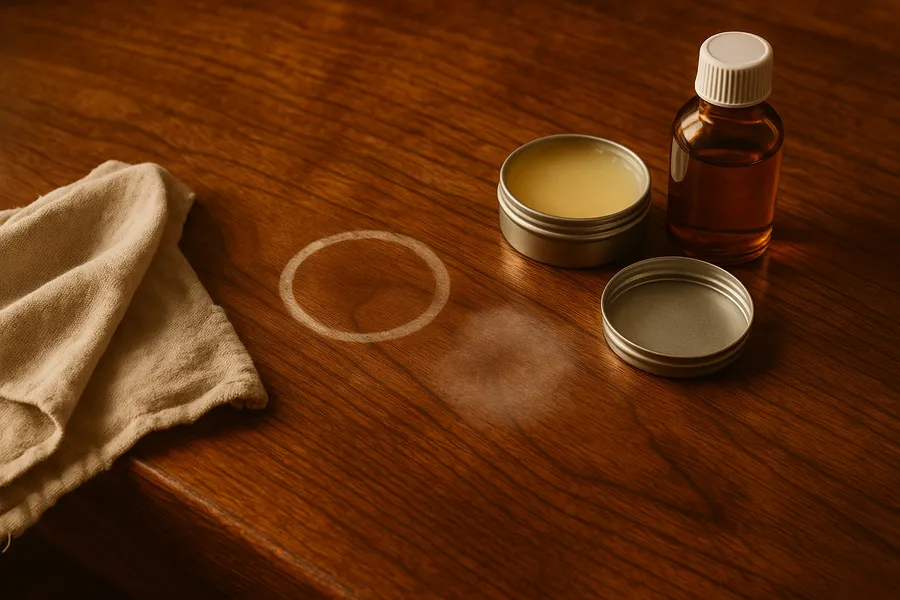
You set a sweating glass of iced tea on the table, forget about it for an hour, and there it is: a pale ring stamped into the finish. Or somebody slides a hot casserole dish onto the top without a trivet, and now there’s a cloudy white blotch that wasn’t there this morning. Over my 40-plus years working on furniture here in Saint Paul, water rings and heat marks are two of the most common calls I get, and the good news is that a lot of them are fixable, sometimes without refinishing at all.
But before you reach for any home remedy, you have to know what you’re actually looking at. Getting that one thing right is the whole ballgame.
The One Question That Determines Everything
When a marked-up table comes into the shop, the first thing I do is figure out where the damage lives: in the finish, or in the wood underneath. That single question decides whether this is an easy fix or a refinishing job.
- White ring or cloudy white haze. This is moisture (or heat) trapped inside the finish itself, not in the wood. This is the good-news case. The finish is like a clear coat over the wood, and the white is just moisture clouding that layer. It can often be drawn back out without stripping anything.
- Dark or black ring. This means water got all the way through the finish and soaked into the wood, staining it from below. You usually cannot buff or wipe this out, because the damage is in the wood fibers, not the coating. These almost always need the finish removed and the top refinished, and sometimes the stain has to be bleached out of the wood first.
- Heat marks. The white cloudy blush a hot mug or dish leaves behind behaves just like a white moisture mark. The heat clouds the finish. So treat heat marks the same way you’d treat a white water ring.
So the rule of thumb is simple: white and cloudy is usually good news, dark and stained is usually a job for the shop.
Gentle DIY Fixes for White Marks Only
If your mark is white or cloudy, and the finish itself is smooth and intact (not cracked or lifting), there are a few low-risk things worth trying at home. I want to be honest with you though: these work on some finishes and not on others, and there’s no way to know for certain in advance. So go gentle, go slow, and follow two rules first.
First, always test in a hidden spot. The underside of the tabletop or an inside edge is perfect. If something reacts badly there, better to find out where nobody will see it.
Second, if you have any doubt about what your finish is, stop. In particular, do not experiment on shellac finishes, French-polished antiques, or anything delicate or valuable. Those finishes are softer and more reactive than a modern lacquer or polyurethane, and a home remedy can turn a small white ring into real damage in seconds. When in doubt, leave it and call a pro.
With those caveats in mind, here are the approaches I’d trust for a white mark:
- A little gentle heat. A hair dryer on a low setting, held a few inches back and kept moving, can coax the trapped moisture out of the finish. Warm it slowly and check often. Some folks use the old iron-over-a-cloth trick, laying a clean cotton cloth or towel over the mark and pressing a warm (not hot, no steam) iron on it for just a few seconds at a time. If you try that one, be very careful and very brief. Too much heat causes its own damage.
- A light oil. Rubbing a small amount of a mild oil into the mark and letting it sit can help draw moisture out and blend the cloudy spot back in. Plain petroleum jelly, a dab of mayonnaise (the oil in it is what does the work), or a furniture oil all get used this way. Let it sit a while, even overnight, then wipe clean and buff.
A few things I’d tell you never to do: don’t reach for abrasives like sandpaper, steel wool, or gritty “polishing” pastes, and don’t use harsh chemicals or solvents. Those don’t remove the cloudiness so much as grind or eat through your finish, and now you’ve traded a white ring for a dull, worn-through patch that definitely needs refinishing.
When It’s Beyond a Home Remedy
Some marks aren’t going to come out with a hair dryer and a little patience, and it’s worth knowing when to stop before you make things worse. Here’s when I’d bring the table to a professional instead of experimenting:
- Dark or black rings where the water has stained the wood itself. As I mentioned, these live in the wood, not the finish, so no amount of oil or heat pulls them out.
- Cracked, lifting, flaking, or worn-through finish. If the coating is already failing, the fix is a new finish, not a spot treatment.
- Valuable antiques and French-polished pieces. These deserve careful, informed hands. The finishes are original and reactive, and they’re worth protecting.
- A top that just looks tired all over. If it’s not one ring but years of rings, scratches, sun fading, and general wear, spot-fixing won’t get you there.
Here’s the part people are always relieved to hear: a professional can very often refinish just the tabletop and leave the base alone. We strip the old finish off the top, address any dark stains or water damage in the wood, and lay down a fresh finish, so the surface you actually look at and use every day comes back looking new. On a dining table, that top is where all the living happens, and bringing it back is exactly what our dining table refinishing work is for. If the table is also loose or wobbly, or a leaf or joint needs attention, that falls under our furniture repair side of the shop, and we handle it at the same time.
And if you’re looking at an older piece and wondering whether it’s even worth putting money into, I wrote a whole separate post on whether it’s worth refinishing at all that walks through how I think about that decision.
Send Me a Photo and Let’s Take a Look
A marked-up tabletop looks like a disaster to a lot of people, but very often it’s a straightforward fix, and even the worst-looking dark rings usually come back beautifully with a proper refinish. You don’t have to live with it, and you don’t have to guess.
Call us at (651) 748-9465, stop by the shop at 622 Como Ave #1 in Saint Paul, or send a few photos through our contact page for a free assessment. Tell me white or dark, and whether the finish is smooth or cracked, and I can usually give you a good idea of what it’ll take right over the phone. Let’s get that table looking the way it should.