How Much Does It Cost to Refinish a Dresser?
· Dale's Furniture Refinishing
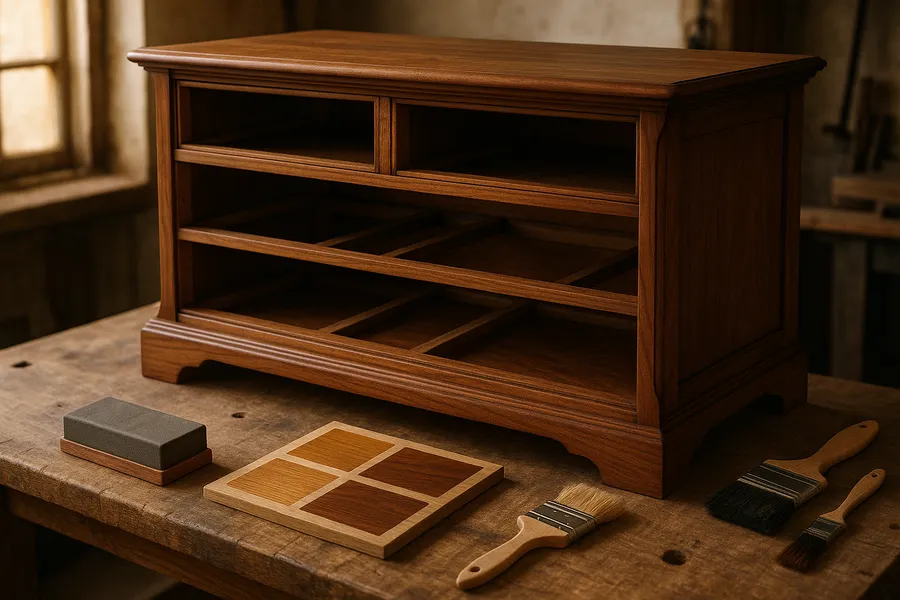
You’ve got a dresser that’s worth saving. Maybe it was your grandmother’s, maybe you found it at an estate sale, or maybe it’s just a solid piece that has served your family for decades and now looks tired. The top has water rings, the finish is worn through where hands rub the drawers open, and you’re wondering what it would take to bring it back. The first question is almost always the same one: “What’s this going to cost me?”
After 40-plus years of refinishing furniture in Saint Paul, I’ll give you the honest answer. It depends on the dresser. No two pieces walk into my shop in the same shape, so no two estimates are the same either. What I can do here is walk you through exactly what drives the price, give you some general ranges to plan around, and help you decide whether it’s worth it. Treat every number below as a ballpark to help you think, not a quote. The only real price comes from me seeing the piece in person.
What Drives the Cost of Refinishing a Dresser
A dresser is more work than people expect. It isn’t one flat surface. It’s a case, a top, sides, and a stack of drawers that each have to be handled separately. Here’s what moves the price up or down.
- Size and the number of drawers. This is the big one. A small three-drawer nightstand or chest is a fraction of the work of a tall nine-drawer dresser or a highboy. Every drawer front gets stripped, sanded, and finished on its own, so more drawers means more hours.
- The wood. Open-grain woods like oak may need grain filling for a smooth result. A walnut or maple piece finishes differently. If there’s veneer, we work carefully so we don’t sand through it, and that takes a patient hand.
- The current finish. An old varnish or shellac usually strips off clean and cooperative. A thick factory polyurethane, or worse, layers of paint, fights back and adds real labor to get down to sound wood.
- Condition and repairs. This is where a dresser hides its cost. Sticking drawers, worn drawer runners and glides, loose joints, veneer chips, and water rings on the top all need attention before any finish goes on. I fold these repairs into the job so the piece works right, not just looks right.
- Hardware. Original pulls and knobs can often be cleaned up and put back, which is my preference when they’re worth keeping. If they’re missing or broken and you want replacements sourced, that’s an added cost.
- Whether you want a color change. Refreshing the existing tone is the least involved path. Going from a dark walnut or espresso finish to a light natural look means more stripping and sometimes bleaching to pull the old color out of the wood, and that adds time.
Stack those factors together and you can see why “what does it cost to refinish a dresser” doesn’t have a single answer.
General Price Ranges to Plan Around
These are general estimates to help you budget, not quotes. Actual pricing swings with size, condition, and the finish you want, so please read them as starting points and nothing more.
- Small dressers and chests. A compact nightstand, a three-drawer chest, or a small dresser in decent shape sits at the lower end. Less surface, fewer drawers, less time.
- Standard dressers. A typical six-drawer bedroom dresser lands in the middle. Most of the pieces I see fall here.
- Large dressers and highboys. A tall nine-drawer dresser, a highboy, or a big double dresser with heavy detail sits at the higher end. More wood, more drawers, more hours.
On top of that, add for the extras: significant repairs, stripping stubborn paint, a full color change with bleaching, or hardware that needs to be sourced. A plain refresh of a sound piece is one price. A damaged, painted dresser that you want taken to a completely different color is another. If you want a fuller picture of the factors behind a number, I wrote a companion piece on what actually drives furniture refinishing cost that goes deeper on the whole subject.
Refinish or Replace a Dresser?
Here’s the part that surprises people. The old solid-wood dresser you’re thinking about refinishing is almost always better raw material than what you’d buy new for the same money.
Pull out a drawer and look at how it’s built. If you see dovetailed corners, solid wood sides, and a case that doesn’t wobble, you’re looking at furniture made to last generations. Most new dressers at a comparable price are flat-pack particleboard with a printed paper or thin veneer skin and drawers held together with staples and glue. Those don’t refinish, and they don’t hold up. When one gets damaged, it’s done.
Refinishing a dresser tends to be worth it when:
- It’s solid wood with sound construction and dovetailed drawers.
- It has sentimental value you can’t buy back.
- Replacing it with equal quality would cost far more than the refinishing.
- The bones are good even though the surface looks rough.
It may not pay off when a piece is cheaply made from the start, damaged beyond what’s economical to repair, or simply something you don’t love enough to keep. I’ll tell you honestly which camp your dresser falls into. If you’re weighing the whole question, our guide on refinishing versus buying new lays out the trade-offs, and you can see the full process on our dresser refinishing page or across the broader furniture refinishing service.
Get a Free, Honest Estimate
Every dresser tells a different story, and the only way to price yours accurately is to see it. I’m glad to look it over, point out what it needs, and give you a straight answer about whether refinishing makes sense for that particular piece.
Give me a call at (651) 748-9465, stop by the shop at 622 Como Ave #1 in Saint Paul, or reach out through our contact page for a free estimate. No pressure and no sales pitch, just an honest assessment from a craftsman who’s been doing this for over 40 years.