Cabinet Refinishing vs. Refacing vs. Painting
· Dale's Furniture Refinishing
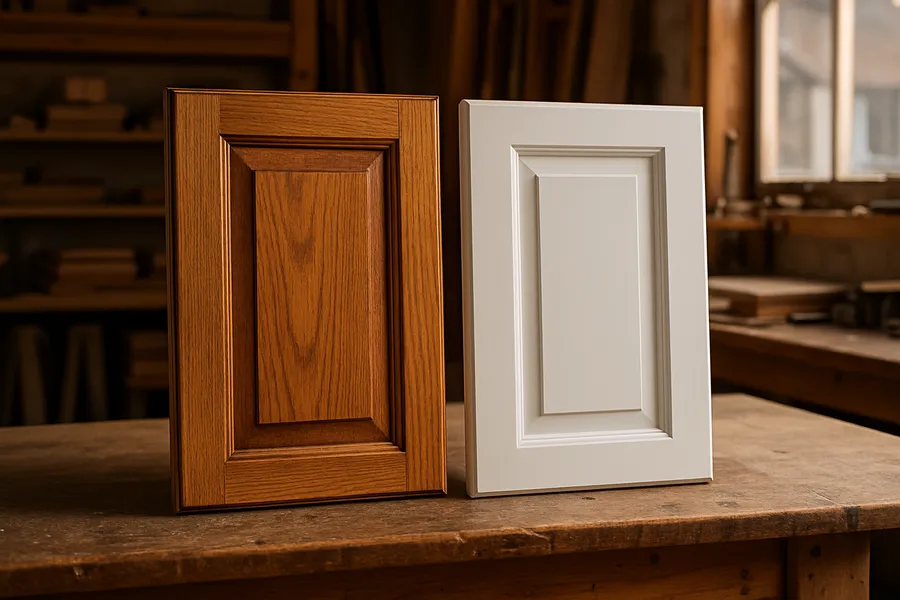
When a Twin Cities homeowner calls our Saint Paul shop about the kitchen, the conversation almost always starts the same way. The cabinets feel dated or tired, but the kitchen itself works fine, and nobody wants to spend the money or live through the mess of a full tear-out. That’s the right instinct. In 40-plus years of working on wood, I’ve seen far more cabinets that needed a fresh finish than needed the dumpster.
The trouble is that four different words get thrown around like they mean the same thing: refinishing, refacing, painting, and replacement. They don’t. They’re four different projects, with four different price tags, and each one leaves you with a different kitchen. This guide sorts them out so you can figure out which one actually fits your cabinets before you ever call for a number.
The Four Ways to Update a Kitchen
Here’s the plain-English version of what each option really means.
- Refinishing. We strip or sand your existing solid wood doors, drawer fronts, and boxes back down, then restain or re-clear them. Same cabinets, same wood, brought back to life. This keeps the real wood grain and gives you a natural, warm look.
- Refacing. We keep your cabinet boxes but cover the visible face frames with new veneer or skins, and usually install new doors and drawer fronts. It’s more than refinishing but less than a full replacement. You get a new look without moving any cabinets.
- Painting. We apply an opaque painted finish over your existing doors and boxes. Paint covers the grain and gives you a smooth, solid color, most often a white or a soft gray. It’s a different look from refinishing and it’s a different job.
- Replacement. The full tear-out. Old cabinets come out, brand-new ones go in. This is the baseline everything else gets compared against, and it’s almost always the most expensive and most disruptive path.
The Honest Difference: Refinishing Shows the Wood, Painting Covers It
This is the distinction I care most about, because it’s the one that trips people up. Refinishing and painting sound similar, but they end in opposite places.
Kitchen cabinet refinishing is about the wood itself. If you’ve got solid oak, maple, cherry, or hickory doors, refinishing brings back that grain and lets it show. You end up with a natural wood kitchen, just fresher and richer than before. This is the right call when the wood underneath is worth showing off and you like a warm, traditional look.
Cabinet painting does the opposite on purpose. Paint is an opaque finish that hides the grain and gives you a clean, uniform color. If you want that bright white or soft gray kitchen that reads more modern, or if your cabinets are a mismatched wood or a plain grade that never looked like much anyway, paint is often the smarter choice. It also lets you change the color completely in a way stain never can.
I do both, so I’ve got no reason to steer you one way or the other. The right answer depends on what you’ve got and what you want, not on what I feel like selling. Good wood you love? Refinish it and show it. Tired wood you’d rather not look at, or a color change you’re set on? Paint it.
Comparing Cost, Durability, Look, and Mess
Every kitchen is different, so I won’t hand you dollar figures here. These are general patterns, not a quote. The only way to price your kitchen is to see it.
- Cost. Refinishing is typically the least expensive of the four, because we’re working with what you already have. Painting is comparable to refinishing in scope, since we’re also finishing your existing doors and boxes. Refacing lands in the middle, because you’re paying for new veneer and usually new doors. Replacement sits at the top, often by a wide margin. That gap is exactly why so many Twin Cities homeowners look at refinishing or painting first.
- Durability. A properly stripped and re-coated wood finish is tough and, when it eventually wears, easy to touch up or redo down the road. A quality painted finish holds up well too, though on heavy-use doors near the sink and stove it can show wear at the edges over the years. Refacing is durable on the visible surfaces, but remember you’re keeping the original boxes, so their condition still matters. Replacement gives you all-new everything, which is part of what you’re paying for.
- Look. This comes down to the wood question above. Refinishing and refacing (with wood-look doors) keep you in natural grain territory. Painting gives you a smooth, solid color. There’s no better or worse here, just what suits your kitchen and your taste.
- Mess and timeline. Refinishing and painting are the least disruptive, especially when we can take doors and drawer fronts back to the shop and do the heavy work there. Refacing is a bit more involved on-site. Replacement is the big one: demolition, dust, and a kitchen you can’t use for a stretch. For a lot of families, avoiding that upheaval is worth as much as the money saved.
If you want a deeper look at how the numbers come together on refinishing work generally, I walk through the real cost factors in a companion post on what refinishing actually costs.
How to Pick
A quick way to self-diagnose before you call:
- Your cabinets are solid wood, in sound shape, and you like natural wood. Lean toward refinishing.
- You want a painted color, or your wood is plain or mismatched. Lean toward painting.
- The boxes are fine but the doors and style feel dated and you want a different door. Consider refacing.
- The layout doesn’t work, the boxes are failing, or the cabinets are cheap and beyond saving. That’s when replacement earns its cost.
Most of the kitchens I see fall into the first two camps, which is good news for the budget.
Come Take a Look With Us
The honest truth is that I can give you a real answer in about ten minutes standing in your kitchen, and I can’t from a keyboard. Every set of cabinets is a little different, and the right update depends on your wood, your goals, and what your budget wants to do.
Give us a call at (651) 748-9465, stop by the shop at 622 Como Ave #1 in Saint Paul, or reach out through our contact page for a free estimate on your kitchen. No pressure and no sales pitch, just a straight opinion from a craftsman who’s been finishing wood for over 40 years.